If you’ve ever looked closely at a bag of Zenoffé coffee, you might have noticed the term “100% Arabica” or “100% Robusta”. While they both end up as a delicious dark liquid in your cup, these two coffee species are worlds apart.
Nearly all the coffee consumed globally comes from just two plants: Coffea Arabica and Coffea Canephora (commonly known as Robusta). But what actually changes for you, the drinker?
Let’s break down the five key differences that define them.
1. The Flavor Profile
This is the most noticeable difference for your palate.
- Arabica: Known for its sweetness and complexity. It has higher sugar and lipid (fat) content, resulting in a smoother taste with notes of fruit, chocolate, or berries. It also has a pleasant, bright acidity.
- Robusta: These beans offer a much bolder, “robust” flavor. They are often described as earthy, woody, or even rubbery. While that might sound intense, Robusta is the secret to a thick, rich crema in espresso and provides a deep, “dark” coffee punch that many traditionalists love.
2. Caffeine Content
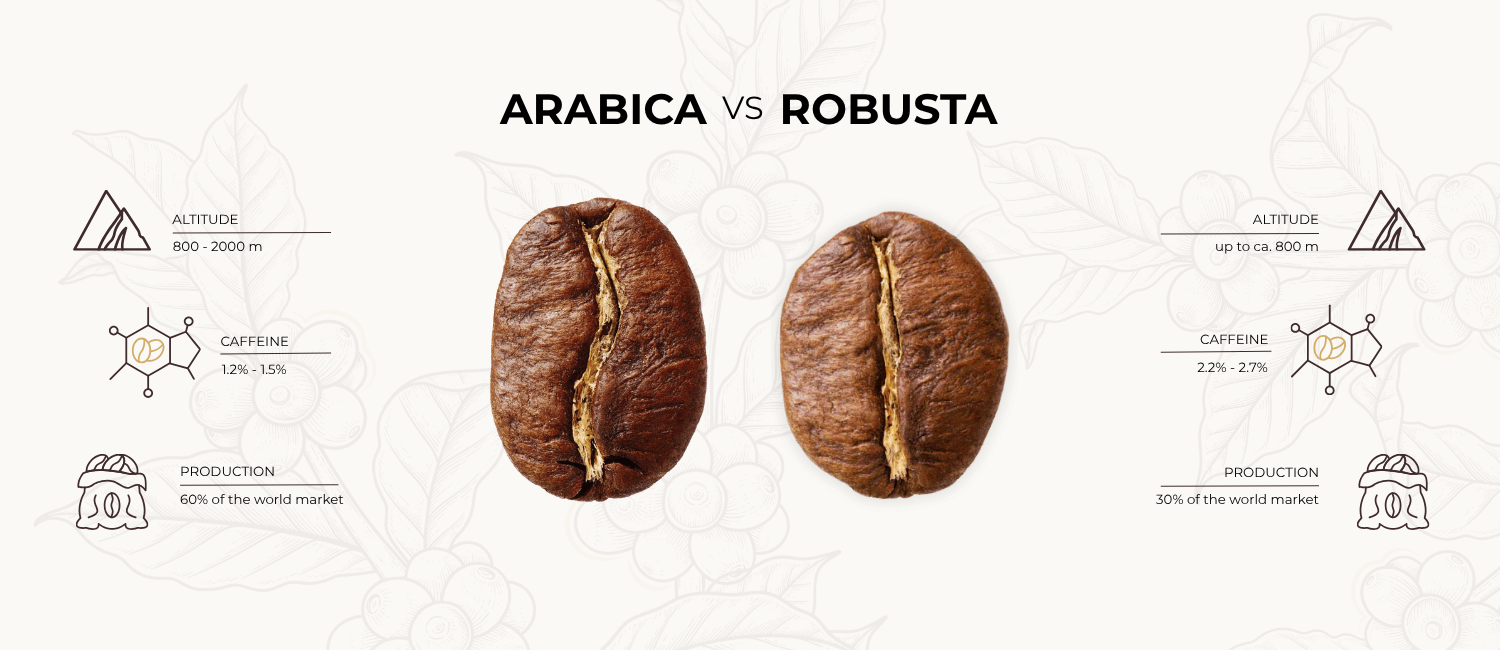
- Arabica: Contains about 1.2% to 1.5% caffeine. It’s the choice for those who want to savor multiple cups throughout the day without getting too jittery.
- Robusta: It packs nearly double the punch, containing 2.2% to 2.7% caffeine. Interestingly, this high caffeine content isn’t just for us – it actually serves as a natural pesticide for the plant, making it toxic to most bugs!
3. Cultivation and Environment
The two plants have very different “personalities” on the farm.
- Arabica: Think of Arabica as the “delicate soul” of the coffee world. It prefers high altitudes (600–2000m), cooler temperatures, and specific rainfall patterns. It is more susceptible to pests and disease, making it harder to grow.
- Robusta: True to its name, this plant is hardy. It grows at lower altitudes (200–800m), thrives in hotter climates, and is much more resistant to diseases. Because it’s easier to farm and yields more fruit, it is generally more affordable to produce.
4. Sugars and Lipids
Science explains why Arabica usually wins the “quality” debate among specialty roasters.
- Arabica: Contains almost 60% more lipids and nearly twice the concentration of sugar than Robusta. These organic compounds are the precursors to the aromatic oils released during roasting, which is why Arabica coffee smells so incredibly fragrant.
- Robusta: With lower sugar and higher levels of chlorogenic acid (an antioxidant that can taste bitter), Robusta lacks the delicate sweetness of its cousin, leaning instead into its bitter, powerful profile.
5. Shape and Appearance
You can actually tell them apart just by looking at the raw beans!
- Arabica: These beans are more oval and elongated. The center crease is usually slightly curved or “S-shaped.”
- Robusta: These beans are smaller and rounder. The crease down the middle is usually much straighter.
Which should you choose?
There is no “right” answer—only what tastes right to you!
If you love a pour-over or a light, nuanced cup where you can taste hints of citrus or jasmine, Arabica is your best friend.
If you want a powerful espresso with a thick, frothy crema that cuts through milk in a latte, a blend containing high-quality Robusta might be exactly what you need.