Cappuccino is one of the most frequently ordered coffee drinks on the planet, yet it is also one of the most misunderstood. Walk into any specialty café, and you will see it sitting proudly on the menu. But what exactly defines a traditional cappuccino, how is it crafted, and what is the story behind its iconic name?
Let’s unwrap the history and anatomy of Italy’s most famous morning ritual.
Why is it named “Cappuccino”?
The origin of the name has nothing to do with coffee beans and everything to do with fashion -specifically, 16th-century monastic robes.
In Vienna, Austria, during the 1700s, a drink called Kapuziner emerged, made of brewed coffee mixed with cream and sugar until the color matched the distinctive, light brown hoods worn by the Capuchin monks (Frati Cappuccini).
When the modern espresso machine was perfected in Italy during the early 20th century, the Italians adopted the name, swapped the brewed coffee for a concentrated espresso shot, and replaced the cream with steamed milk. The name stuck, forever linking your morning beverage to a centuries-old monk’s habit.
The Anatomy of a Perfect Cappuccino
At its core, a classic cappuccino is a masterclass in symmetry. It relies on a strict Rule of Thirds to create a harmonious balance between intense coffee flavor and velvety dairy sweetness.
A standard 6 oz (180 ml) cup contains:
- 1/3 Rich Espresso: The bold, concentrated flavor base.
- 1/3 Steamed Milk: Adds liquid warmth and dilutes the bitterness.
- 1/3 Microfoam: A thick, airy layer of aerated milk bubbles that sits like a cushion on top.
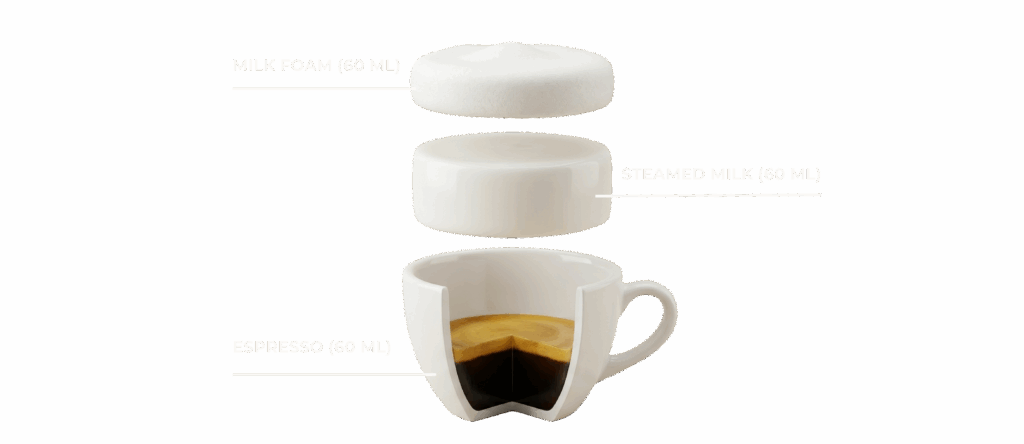
This is what differentiates a cappuccino from a latte. While a latte is mostly liquid steamed milk with a thin skim of foam, a cappuccino prioritizes that deep, thick texture of microfoam.
The Experience
When you take your first sip of a well-made cappuccino, your lips should meet a cool, dense layer of velvety foam, followed immediately by the warm, intense espresso punch cutting underneath it. It’s a texture play that requires no sugar—the natural sweetness of the steamed lactose combined with a properly developed roast provides all the balance you need.
Next time you order a cappuccino at the counter, look closely at the foam. You aren’t just drinking coffee; you are enjoying a centuries-old Austrian concept perfected by Italian engineering.