
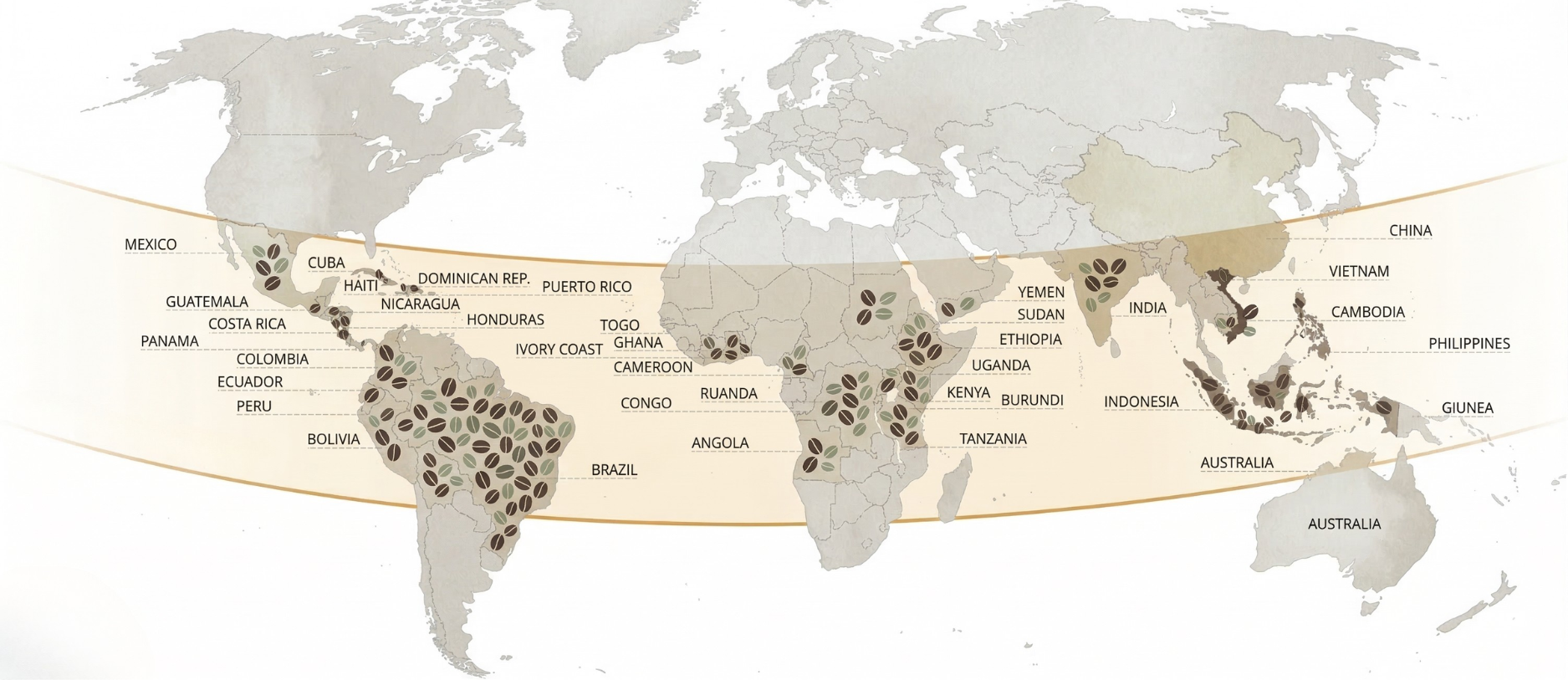
Ever wondered why your coffee comes from countries like Brazil, Ethiopia, or Colombia – but never from Europe? While coffee is enjoyed in nearly every corner of the world, it can only be grown in a very specific, narrow band around the Earth’s center.
This is known as the Coffee Belt.
What Is the Coffee Belt?
The Coffee Belt is an imaginary horizontal strip that wraps around the globe, situated between the Tropics of Cancer and Capricorn (25 degrees north to 30 degrees south of the equator). In fact, more than 70 countries fall within this zone, producing the coffee we enjoy every day.
Why Does Coffee Grow Only Here?
Coffee is a delicate plant—it needs very specific conditions to thrive. The Coffee Belt offers the perfect balance:
- Mild Temperatures: Constant warmth between 15°C and 24°C.
- Tropical Rain: Regular, predictable rainfall to keep the soil hydrated.
- High Altitudes: Mountainous terrain that slows the ripening process, leading to more complex flavors.
- Rich Soil: Much of this belt is home to volcanic soil, which is packed with the nutrients required for high-quality beans.
The Three Main Coffee Regions
Although the Coffee Belt is one continuous zone, it’s usually divided into three key regions – each with its own character:
- Latin America: Known for being balanced and approachable. Think of the classic chocolatey and nutty notes found in beans from Brazil, Colombia, and Costa Rica.
- Africa: The birthplace of coffee. Regions like Ethiopia and Kenya produce beans that are celebrated for their vibrant acidity and floral, wine-like aromas.
- Asia-Pacific: If you prefer something bold and earthy, this is the source. Indonesia and Vietnam are famous for their full-bodied, spicy, and deep herbal profiles.
Why It Matters for Your Cup
The Coffee Belt isn’t just geography – it’s the foundation of flavor.
Everything from altitude and soil to climate and region influences what ends up in your cup. That’s why a coffee from Ethiopia tastes completely different from one grown in Brazil.