When you stand in front of the coffee shelf, looking at a bag of Light Roast and a bag of Dark Roast, what determines your choice? For many, the logic is simple: “I need a big energy boost, so I’ll grab the Dark Roast.”
But is that actually true? Does a bold, smoky flavor equate to more energy?
Today, we’re diving into the science of the bean to separate coffee myths from reality.
The Short Answer: No, Dark Roast Isn’t “Stronger”
The common belief that dark roast coffee delivers a stronger caffeine kick is a misconception. In reality, dark roast does not have more caffeine than light roast. In fact, depending on how you measure your coffee, it might actually contain slightly less.
The “strength” people associate with dark roast is a reflection of the roasting process, not the caffeine content. As beans roast longer, they develop deep, bittersweet compounds and lose the fruit-like acidity of the raw bean. This heavy body and pungent aroma trick our brains into expecting a bigger energy boost, even if the chemistry says otherwise.
The Science of the Roast
To understand caffeine levels, we have to look at how the bean physically changes in the roaster. Caffeine is a remarkably stable molecule; it can withstand high temperatures without breaking down significantly. However, the bean itself changes quite a bit.
1. Caffeine by Volume
Light roast beans are roasted for a shorter time. They retain more moisture, making them smaller and denser. Dark roast beans stay in the heat longer, losing water and expanding in size – becoming “puffy” and light.
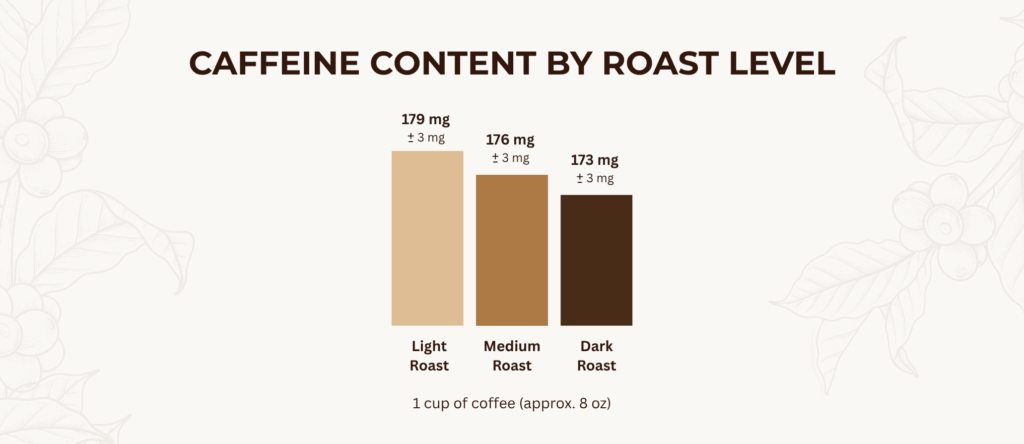
If you measure your coffee by the scoop, a light roast has more caffeine. Because the beans are smaller, you can fit more of them into a single scoop than the larger, expanded dark roast beans.
2. Caffeine by Weight
If you are a coffee purist who uses a digital scale to weigh out your grounds, the caffeine content is almost identical. Since caffeine doesn’t vanish during the roast, 30 grams of coffee will provide roughly the same stimulant effect whether it’s a light or dark roast.
What Really Determines Your Cup’s Caffeine?
If the roast level isn’t the main factor, what is? Two things matter much more than the color of the bean:
- The Bean Variety: This is the biggest factor. For example, Robusta beans naturally contain nearly twice the caffeine of Arabica beans.
- The Brewing Method: Factors like a finer grind size, longer steep times (like French Press), and higher water temperatures increase the efficiency of caffeine extraction. Interestingly, while espresso is more concentrated per ounce, a standard cup of drip coffee usually has more total caffeine because you’re drinking a much larger volume.